
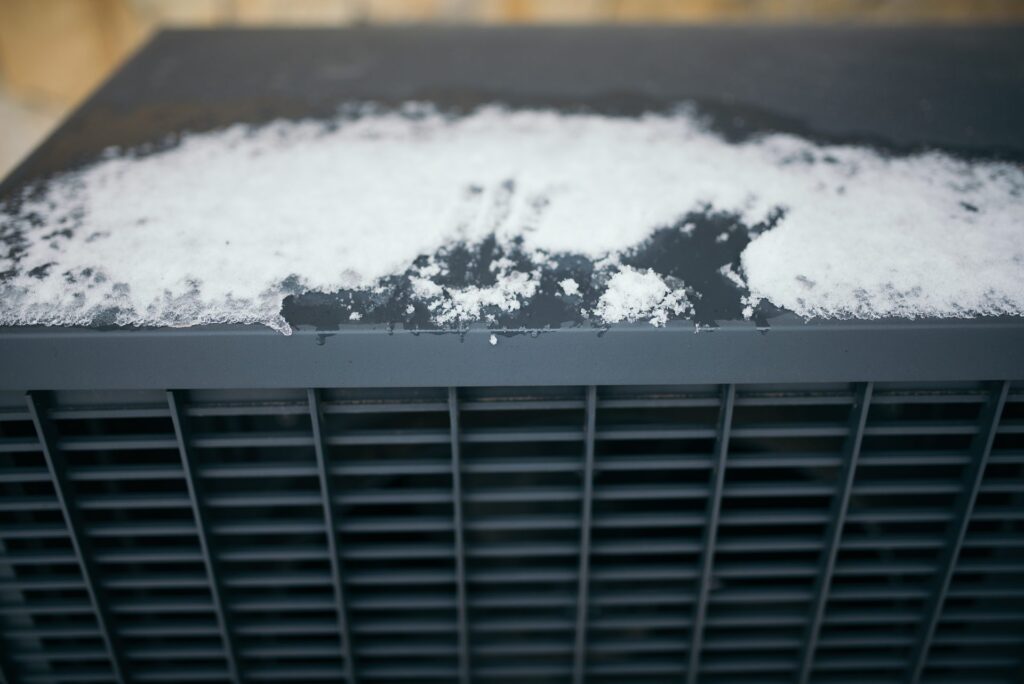
Calgary winters don’t mess around, and neither should your lineset installs. When it’s -25°C outside, the details that don’t matter in July — insulation continuity, condensation control, how you handle copper in the cold — suddenly matter a lot. Here’s what to watch for on lineset work in a cold climate.
Insulation isn’t optional here
In milder climates, a small gap in suction-line insulation might never cause a visible problem. In Calgary, it will. Any exposed section of suction line in an unconditioned space — attic, crawlspace, exterior wall — becomes a condensation point when the system runs, and winter temperature swings make it worse. Water dripping onto drywall or into a wall cavity is a callback you don’t need.
The fix is continuous insulation with no gaps, especially at hangers, penetrations, and bends. Pre-insulated linesets give you a head start because the insulation is applied along the full length before the coil ever reaches your truck — no taped field joints to fail. Whatever insulation you use, check it end to end before you close up.
Watch your penetrations
Where the lineset passes through the building envelope is the most vulnerable spot in a cold-climate install. It’s where insulation gets pushed back, where air leaks in, and where condensation forms on cold copper inside a warm wall.
Seal penetrations properly — both the insulation and the air barrier. If the insulation bunches up or pulls back as you feed the lineset through, pull it back into place and secure it. A penetration with bare copper inside the wall is a problem waiting for January.
Handle copper gently in the cold
Copper gets less forgiving when it’s cold. It’s more prone to kinking and work-hardening at low temperatures, so be extra careful uncoiling and bending when the coil has been sitting in a cold truck or on a cold job site. Let it warm up if you can. Make your bends gradual — use a proper bending tool rather than muscling it by hand, especially on the larger suction line.
This applies to the insulation jacket too. Cold insulation is stiffer and more likely to split if you force a tight bend. If the jacket cracks, seal it. An exposed split in the insulation is no better than a gap.
Think about where water goes
Cold-climate installs need you to think about drainage. Condensation on the suction line, defrost water from a heat pump, condensate from the indoor coil — in winter, water that can’t drain becomes ice, and ice becomes a problem. Route lines so incidental moisture drains away from the building, not into it. Make sure outdoor units have clear drainage and aren’t sitting where defrost water will pool and freeze around the base.
Follow the manual’s cold-climate notes
When you’re sizing the lineset, remember that piping tables assume certain operating conditions. In a cold climate, heat pumps run harder and longer in heating mode, which means the lineset sees more demanding conditions than a cooling-only install elsewhere. Some manufacturers publish specific piping notes for low-ambient operation. If the manual has them, follow them — they take precedence over rules of thumb.
Protect the connections at the outdoor unit
The lineset connections at the outdoor unit take the worst of it — wind, snow, ice. Make sure service valves are properly capped, insulation runs all the way to the unit with no exposed stub, and the lineset is secured so it doesn’t move in the wind. A lineset that vibrates against the unit or the wall will eventually wear through the insulation jacket.
What we stock for Calgary work
Our pre-insulated linesets — 1/4″ × 3/8″, 1/4″ × 1/2″, and 3/8″ × 5/8″, all 25 ft coils with 1/2-inch insulation — are a solid starting point for residential cold-climate installs. Continuous factory-applied insulation means one less thing to worry about when it’s -20°C and you’re trying to finish before dark. Stock and contractor pricing are confirmed at the time of quotation. Local? Pickup or delivery is by confirmed arrangement.
Need linesets for a project? Call 587-437-0483 or send your material list to info@corelinehvac.ca and we’ll confirm stock and contractor pricing.